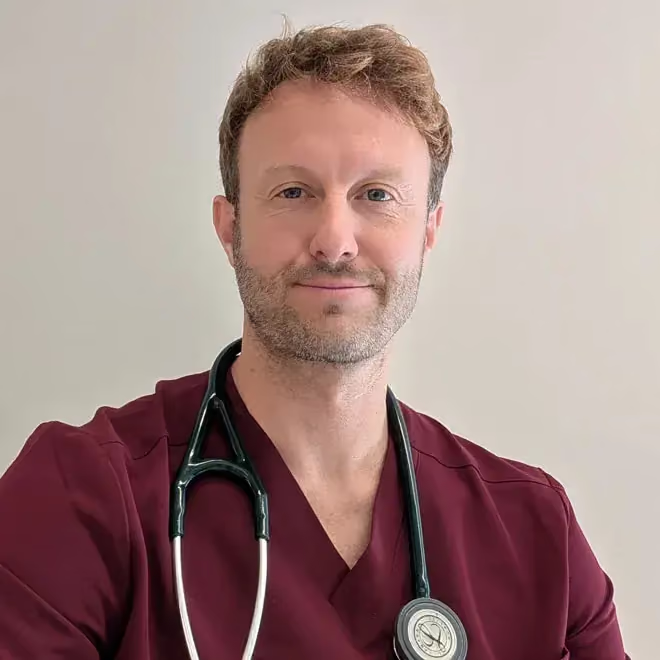
Why we created Emergency Doctors
Shortness of breath. Abdominal pain. A head injury. A worrying rash. These are the sorts of medical issues that can feel urgent when you experience them - too urgent for a visit to the GP, perhaps, but not necessarily urgent enough for a visit to A&E.

Seeing the GP means waiting for an appointment, waiting to be seen, then very possibly getting sent to A&E anyway. A trip to A&E means waiting while extremely urgent cases are given priority. Neither option feels right.
These are the situations Emergency Doctors was designed to deal with - providing expert urgent care online from Senior NHS Emergency Medicine consultants in a matter of minutes, 7 days a week. Each consultation entails a no-rush video call with a senior doctor, a clear plan with prescriptions, referrals and follow-up tests as necessary - and, optionally, a follow-up appointment to discuss results and next steps.
Here’s how we knew this service was needed.
We saw a growing gap in urgent care
Too many people are left unsure whether to wait for a GP appointment, visit A&E or simply hope their symptoms improve. GP practices are often booked out days in advance, and same-day slots can be scarce - especially outside office hours. Meanwhile A&E is for life-threatening emergencies, not for the chest pain that might be muscular, or the rash that might be something serious or nothing at all.
This uncertainty leaves people stuck between two systems that weren't built for their situation, often defaulting to A&E out of caution and adding to pressure on departments already stretched thin. We designed Emergency Doctors to fill that gap.

We wanted senior expertise to be available sooner
Emergency Doctors connects patients with experienced NHS Emergency Medicine consultants for rapid assessment and a clear plan. Patients speak directly to a senior decision-maker from the outset - someone with years of frontline emergency experience who can quickly differentiate matters that need urgent attention from those that are more routine.
That means quicker reassurance when symptoms are minor, and faster treatment when they're not: prescriptions, referrals, or urgent tests all arranged without the usual delays. Getting the senior expertise early on reduces uncertainty and avoids unnecessary escalation, while directing patients onto the correct pathway from their very first consultation.
We created a separate route, not a faster NHS queue
Paying for a consultation does not give anyone priority in hospital. NHS care continues to be prioritised according to clinical need - exactly as it should be. Emergency Doctors doesn’t let people jump the queue for hospital treatment - that would undermine the very system it was designed to support.
Instead, Emergency Doctors provides a separate pathway for the many cases that shouldn’t be in a hospital queue at all. By resolving manageable cases online, away from A&E, capacity is freed up for those who do need emergency department care, while giving everyone else a faster, more appropriate route to the advice or treatment they need.
We aim to support the NHS, not replace it
Emergency Doctors works alongside the NHS, not against it: our consultants are drawn from NHS Emergency Medicine backgrounds and understand exactly when a case belongs in A&E and when it doesn't. Emergency Doctors is not a replacement for 999, and cannot arrange ambulances.
However, where hospital care is needed, referrals are provided promptly and clearly. Where it isn't, issues are resolved directly, sparing patients an unnecessary wait and sparing A&E an extra patient.
The goal is a healthier, more efficient system overall - one where each part of urgent care can better do the job it was designed to do.
Why we created Emergency Doctors
Shortness of breath. Abdominal pain. A head injury. A worrying rash. These are the sorts of medical issues that can feel urgent when you experience them - too urgent for a visit to the GP, perhaps, but not necessarily urgent enough for a visit to A&E.
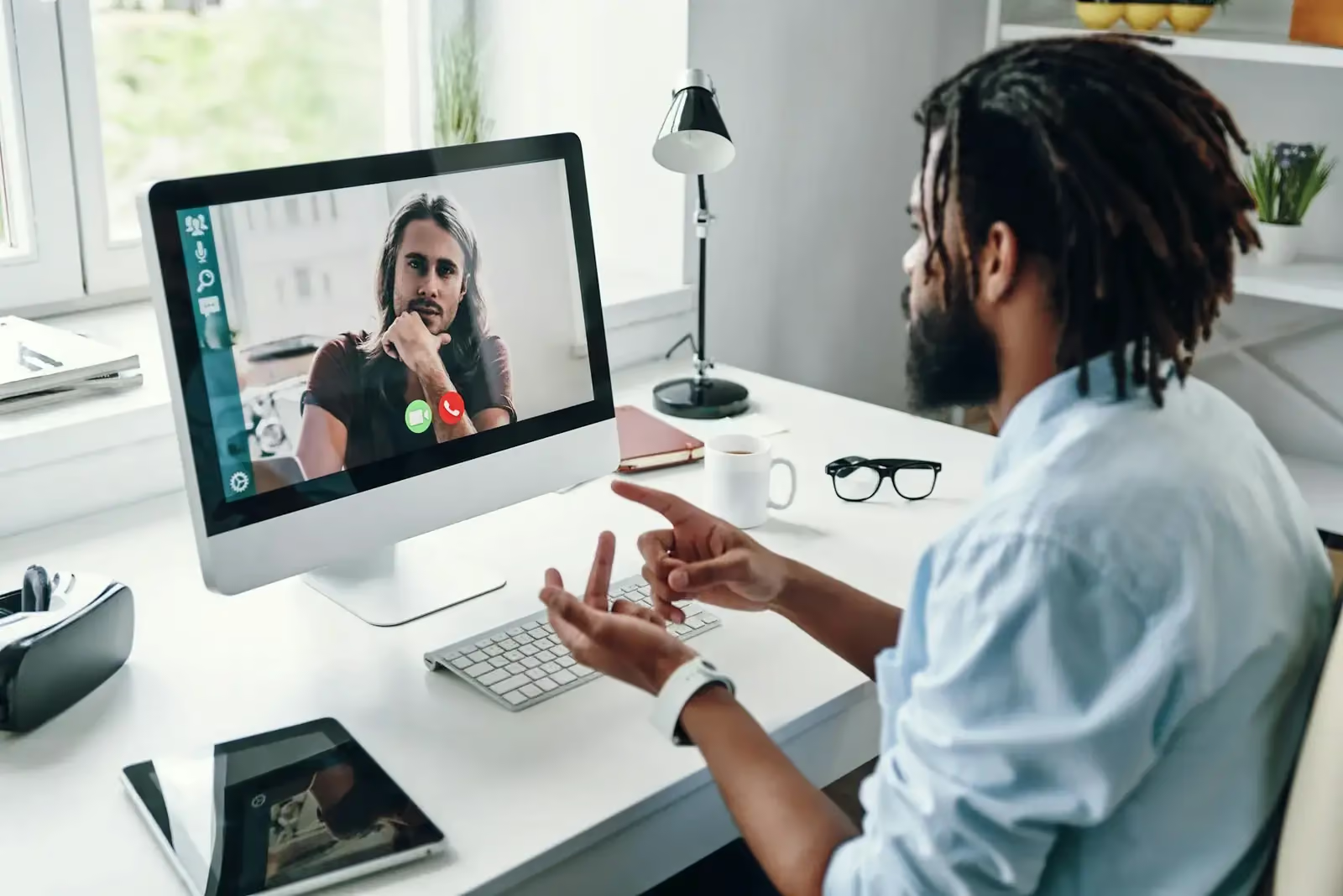
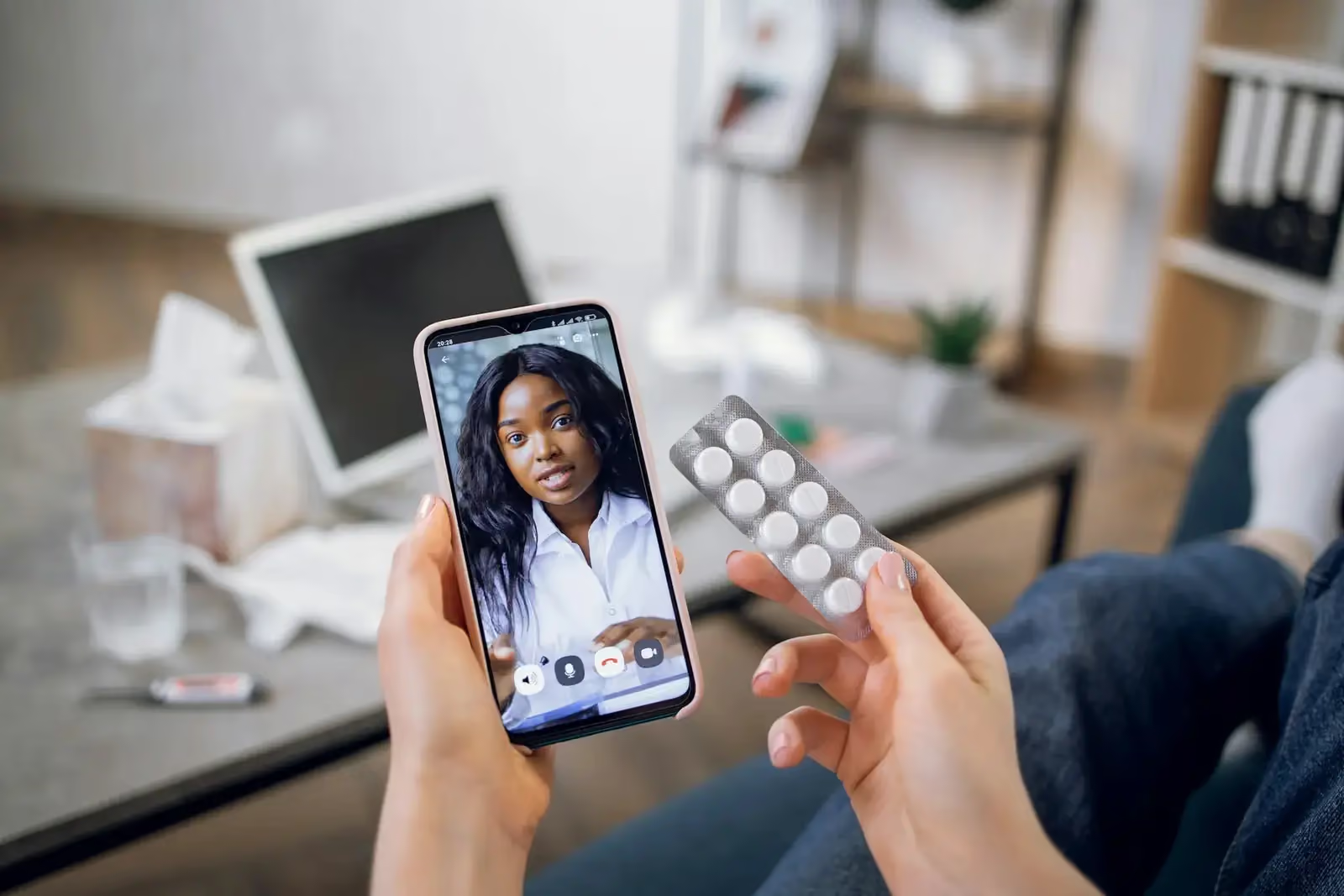
Online Emergency Doctor Consultations: How Smartphone Face Scanning Supports Remote Care
A short smartphone face scan can give the doctor additional physiological information to support what they're already seeing and hearing.