Online Emergency Doctor Consultations: How Smartphone Face Scanning Supports Remote Care
A short smartphone face scan can give the doctor additional physiological information to support what they're already seeing and hearing.

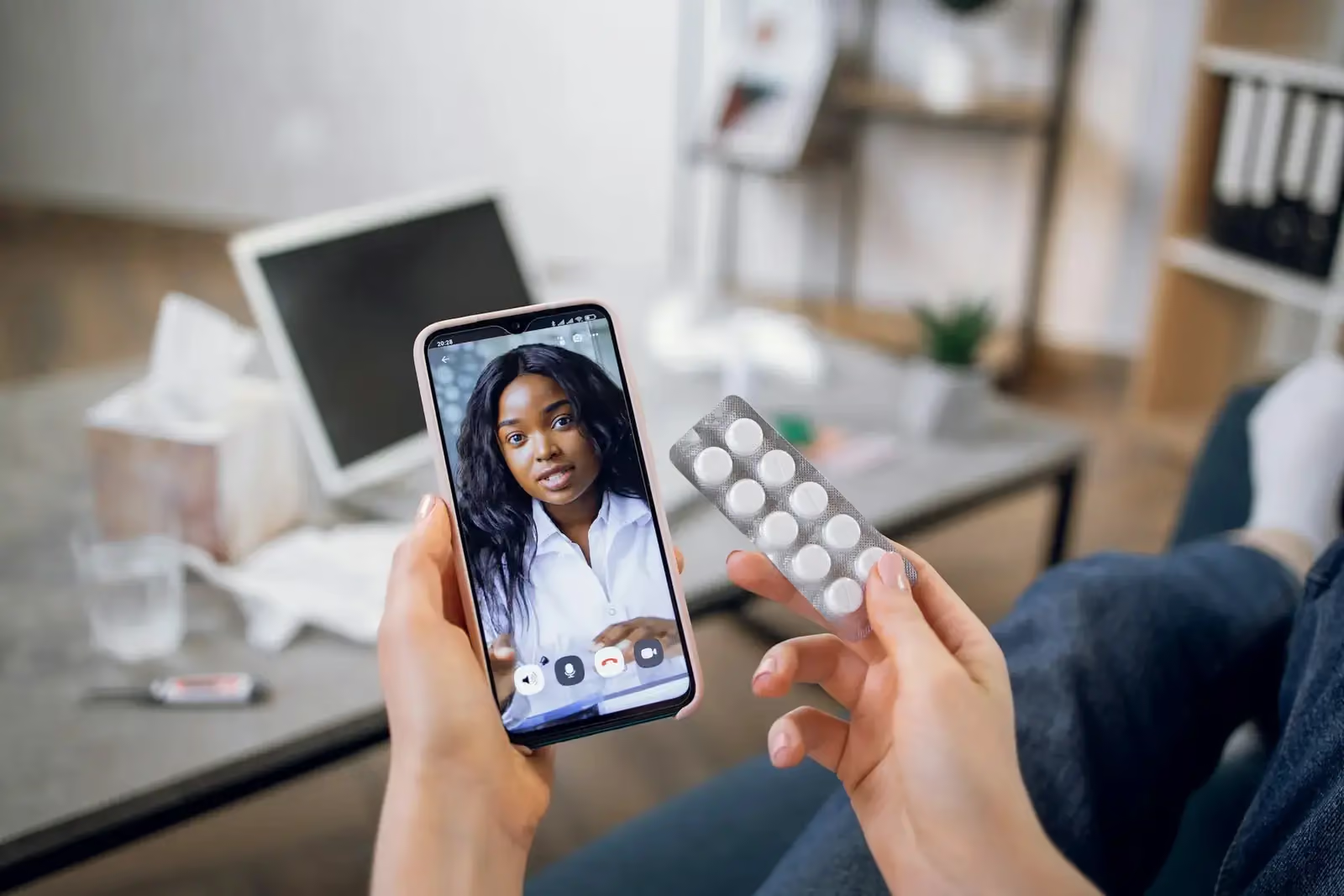
An online emergency doctor consultation lets you speak to a UK emergency medicine specialist by video, from home, usually within minutes. The doctor takes your history, observes you on camera, and decides what happens next - whether that's reassurance, a prescription, a referral, or guidance to attend A&E or call 999.
What's newer is the technology now sitting alongside that consultation. A short smartphone face scan can give the doctor additional physiological information - heart rate, breathing rate, indicators of blood pressure - to support what they're already seeing and hearing. It doesn't diagnose anything, and it doesn't replace clinical judgement. It gives the doctor a clearer picture during a remote assessment.
This article explains how the service works, what the face scan does, when an online consultation is the right choice, and when it isn't.
How an online emergency doctor consultation works
The process is designed to be fast and low-friction. You book a slot through https://emergencydoctors.co.uk/, join a secure video consultation from your phone or laptop, and a consultant-level emergency doctor takes your call.
The doctor will:
- Take a focused history of your symptoms
- Observe you on video - your colour, breathing, level of distress, and any visible signs
- Ask you to perform simple checks where relevant (showing a rash, demonstrating range of movement, taking your own pulse)
- Use the smartphone face scan if appropriate
- Make a clinical decision and explain what happens next
A typical consultation lasts 15-20 minutes. The doctor can prescribe medication, write a fit note, refer you onward, or escalate to in-person urgent care where needed.
The role of smartphone face scanning in remote assessment
In-person emergency assessment relies on a set of basic observations - heart rate, blood pressure, oxygen levels, breathing rate, temperature. These are what NHS staff call "vital signs", and they're used alongside history and examination to gauge how unwell someone is. The NHS National Early Warning Score (NEWS2) used across the NHS is built around exactly these measurements.
The challenge with remote consultations is that the doctor can't take those readings directly. Most patients don't own a blood pressure cuff or pulse oximeter, and even when they do, technique varies.
Smartphone face scanning helps close that gap. The technology uses the phone's camera to detect tiny colour changes in the skin caused by blood flow - a technique called photoplethysmography, which is the same underlying principle used by the pulse oximeter on your finger in any A&E department. The scan takes around 30 seconds. You hold the phone in front of your face, stay still, and the software produces a set of physiological readings.
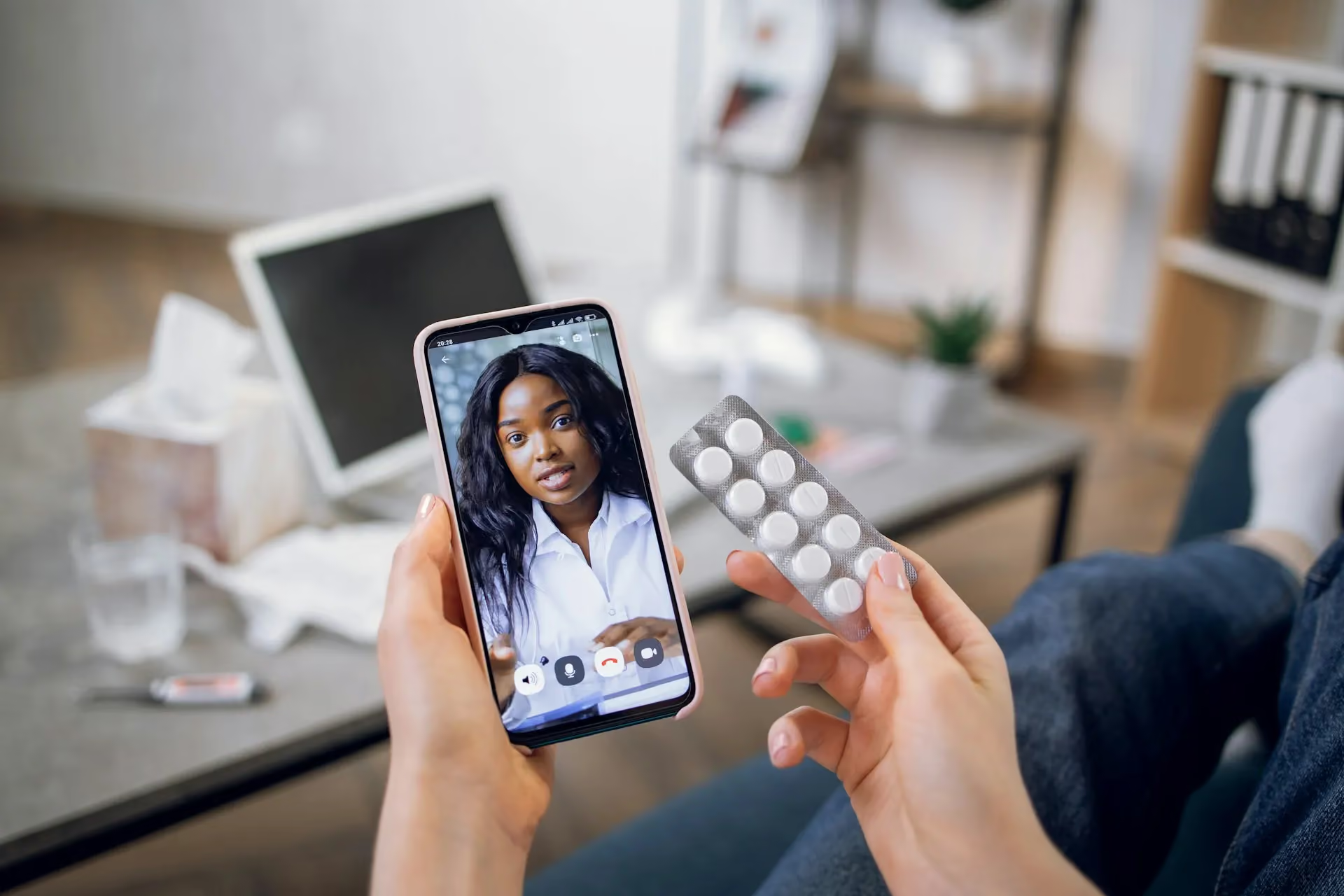
These readings give the doctor extra information they wouldn't otherwise have during a video call. They don't replace a proper clinical examination, and they aren't used to make a diagnosis. They sit alongside the conversation, the visual observation, and the doctor's clinical judgement.
What the face scan measures - and what it doesn't
The scan provides indicators of:
- Heart rate
- Breathing rate
- Heart rate variability
- Oxygen levels
- Blood pressure indicators
These are the same categories of information a clinician would gather in person. The values are presented to the doctor as part of your consultation record.
What the scan does not do:
- Diagnose any condition
- Replace a clinical examination
- Make decisions about your care
- Detect specific diseases or illnesses
If the readings or your symptoms suggest something more serious, the doctor will escalate you to in-person care. The technology is an assessment aid, not an autonomous tool.
When an online emergency doctor consultation is appropriate
Remote consultations are well suited to a wide range of urgent but non-life-threatening problems. Common reasons people book include:
- Sudden infections (urinary, chest, skin, ear)
- Acute pain that needs assessment
- Worsening of an existing condition
- Worrying symptoms that don't feel like an A&E case but can't wait for a GP appointment
- Travel-related illness
- Out-of-hours urgent concerns
The benefit is speed. NHS data shows the average A&E wait in England is several hours, and same-day GP appointments are often hard to secure. A consultant emergency doctor on video, within minutes, fills a real gap.
When you should call 999 or go to A&E instead
Some situations need in-person emergency care immediately, not a video call. Always call 999 or attend A&E for:
- Chest pain or pressure
- Difficulty breathing or sudden shortness of breath
- Signs of stroke (face drooping, arm weakness, speech difficulty - the NHS FAST test)
- Severe bleeding that can't be stopped
- Loss of consciousness or seizures
- Severe allergic reactions
- Suspected sepsis (very high or very low temperature, confusion, rapid breathing)
- Severe injuries
If you're not sure how serious something is, NHS 111 is the right first step. An online emergency doctor consultation is appropriate when the situation is urgent but not life-threatening.
Privacy, data and clinical responsibility
All consultations are with GMC-registered emergency medicine doctors. The clinician remains responsible for every decision made about your care. Technology supports the consultation - it doesn't make decisions.
The face scan technology processes most data on your own device. Only encrypted data signals are sent for analysis, and no video or images of your face are transmitted or stored. The technology is built to GDPR standards and aligned with NHS data security requirements.
You don't have to use the face scan. If you'd prefer to consult without it, the doctor will proceed using the standard video consultation and any observations you can share (such as a thermometer reading at home).
Frequently asked questions
Is an online emergency doctor consultation safe?
Yes, for appropriate conditions. The consultation is with a GMC-registered emergency medicine doctor who will escalate you to in-person care if needed. It is not a replacement for 999 or A&E in genuine emergencies.
How quickly can I speak to a doctor?
Most patients are seen within minutes of booking. Exact times depend on demand.
Can the doctor prescribe medication?
Yes. Prescriptions can be issued electronically and sent to a pharmacy of your choice.
Does the face scan diagnose conditions?
No. It provides physiological information that supports the doctor's assessment. All clinical decisions are made by the doctor.
Do I need any special equipment?
A smartphone or laptop with a camera and a stable internet connection. No additional hardware is required.
What does it cost?
£120 per consultation.
Is my consultation confidential?
Yes. Consultations are private and your medical information is handled in line with GDPR and NHS data security standards.
Can I get a fit note or referral?
Yes. The doctor can issue fit notes and arrange referrals where clinically appropriate.
Online Emergency Doctor Consultations: How Smartphone Face Scanning Supports Remote Care
A short smartphone face scan can give the doctor additional physiological information to support what they're already seeing and hearing.
Why Online Urgent Care Is a Game-Changer for Non-Emergency Health Problems
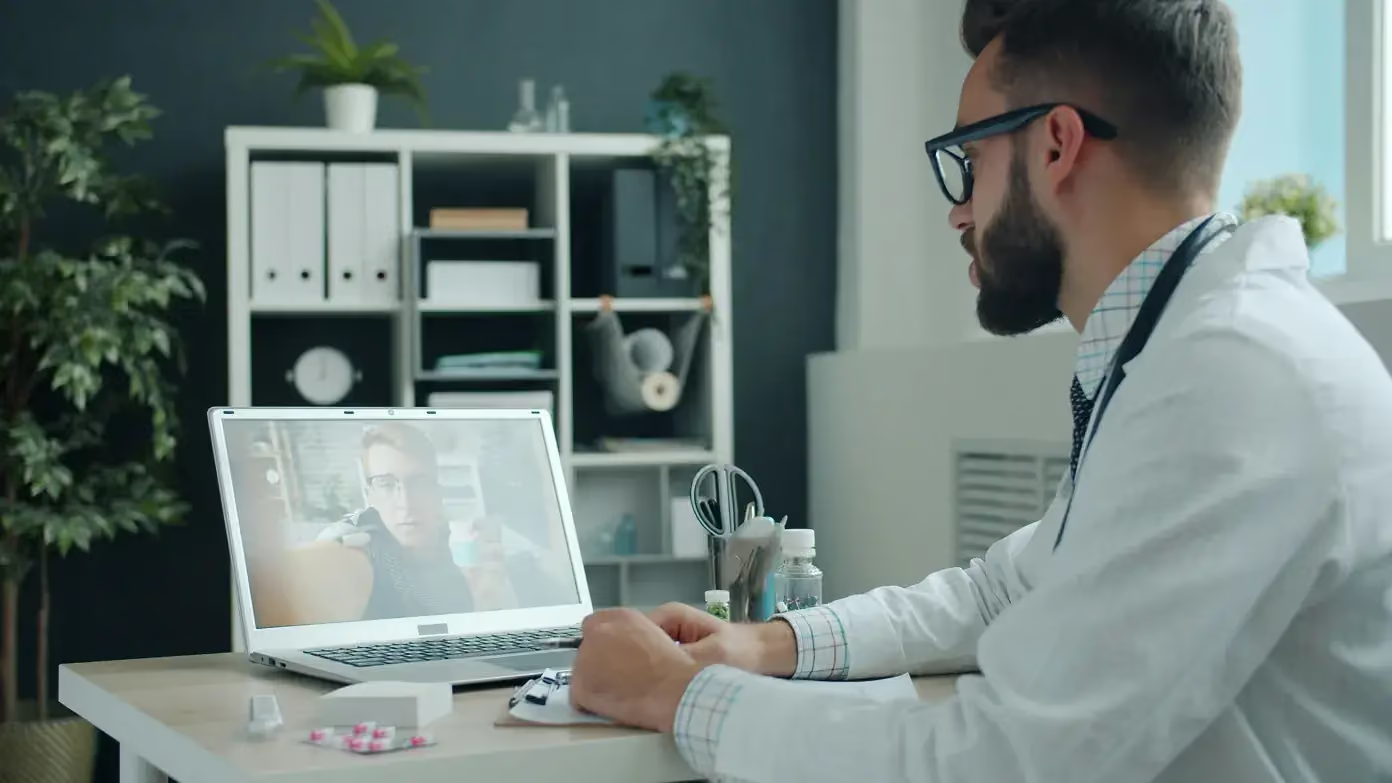
We’ve all been there: you wake up with a high temperature, a nasty cough, or a painful ankle, and your first thought is, “Do I go to A&E? Should I wait for a GP appointment? What if it gets worse?”

